Wearing Bands on Your Braces
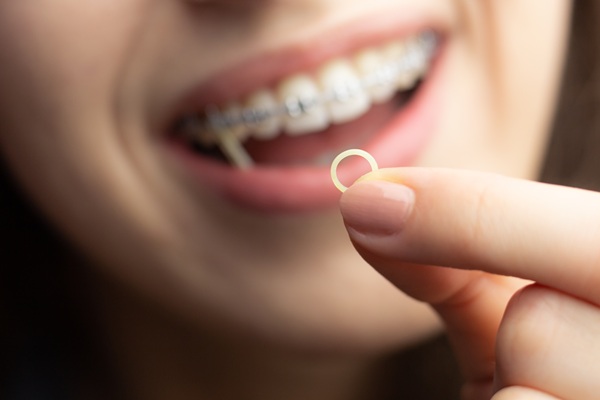
Braces are a great way to straighten teeth, close gaps and even correct uneven bites. However, some patients may require more than just braces. In these scenarios, a general dentist may recommend the use of additional bands, which can be extremely helpful for the entire treatment process.
Bands for braces
Keep reading to find out what bands are, how they are used and what the benefits are!
What are bands for braces?
There are two types of bands for braces. The first type are the bands that go around each metal bracket. These hold the wires in place so that the brackets can be connected. The second type are interarch rubber bands, which are used for enhancing the treatment process. Both are typically made of plastic materials, which are completely safe for the mouth. General dentists often allow children patients to choose the color of their bands to make the treatment process more enjoyable.
Typically, the patient is given a stockpile of interarch bands that can be used as needed. When the patient eats or brushes their teeth, the bands are to come out. The bands that go around the brackets do not come out, unless the dentist needs to replace or repair.
How bands are used for braces
The bands that go around each bracket are used to simply hold the wire in place. Wires feed through each bracket on every tooth, and with the help of the bands, the wires are able to stay in one place without moving around.
Interarch bands are used for braces to adjust the bite and position of the jaw. They help apply additional force on certain teeth so that there is more pressure exerted. This gives the teeth and jaw more of a push that may not have been achievable without them. Typically, the general dentist will apply bands a few months within the process. They want to allow the teeth to begin to shift before applying them.
When placement does take place, the general dentist will likely put the bands on two top brackets and then connect them to two lower brackets. Sometimes, bands will be placed on multiple teeth to ensure that the jaw moves appropriately. As the treatment progresses, the dentist may make additional adjustments based on how the teeth and jaw are reacting.
Benefits of bands
There are a lot of benefits to bands for braces. General dentists often recommend interach ones during the final step in the braces treatment process because they can be very beneficial towards the end. Some of the benefits include the following:
- Achieving a more even bite
- Ensuring that the jaw is properly aligned
- The jaw and bite are both able to be more refined
- Ensuring a proper hold
- Bands can speed up the end of braces treatment
Learn more today!
Want to know more about bands for braces? Our team can help! Questions and concerns regarding braces and the use of bands should be addressed by a general dentist. Reach out today to get started!
Request an appointment here: https://www.thescarsdaledentist.com or call The Scarsdale Dentist at (914) 491-5802 for an appointment in our Scarsdale office.
Check out what others are saying about our dental services on Yelp: Braces in Scarsdale, NY.
Related Posts
Are you tired of loose dentures or tooth loss that impacts your daily life? All-on-4 implant treatment from a restorative dentist provides a permanent solution to restore your smile. Missing an entire arch of teeth changes everything from speaking to chewing and eating. Fortunately, modern restorative dentistry provides a straightforward way to a healthy and…
Clear aligners are becoming increasingly popular and many are choosing them over traditional braces. They offer a range of benefits, which include a discreet treatment option, the ability to remove them while eating and brushing teeth and faster treatment times on average. Learning more about how clear aligners differ from traditional braces and why so many…
When you look for an Invisalign® dentist, the goal is to achieve a straighter smile without the hassle or appearance of traditional metal hardware and wires. This modern approach to teeth straightening relies on clear aligner sets to shift the teeth into place with high accuracy. The process is straightforward. However, the success requires a…
Professional teeth whitening creates a brilliant first impression that boosts confidence during every social and professional interaction. Maintaining this new glow requires a bit of strategy, especially in the first 48 hours when the teeth remain extra absorbent. A few simple changes to daily habits protect the investment and keep the smile looking fresh for…